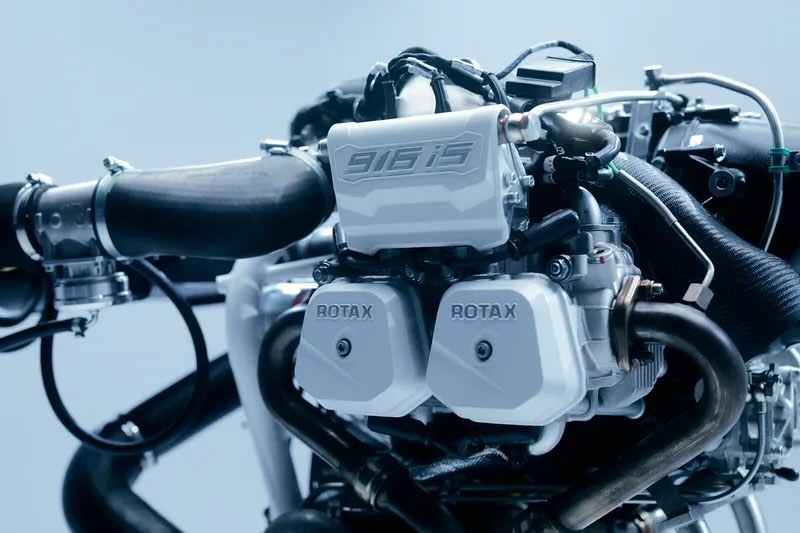

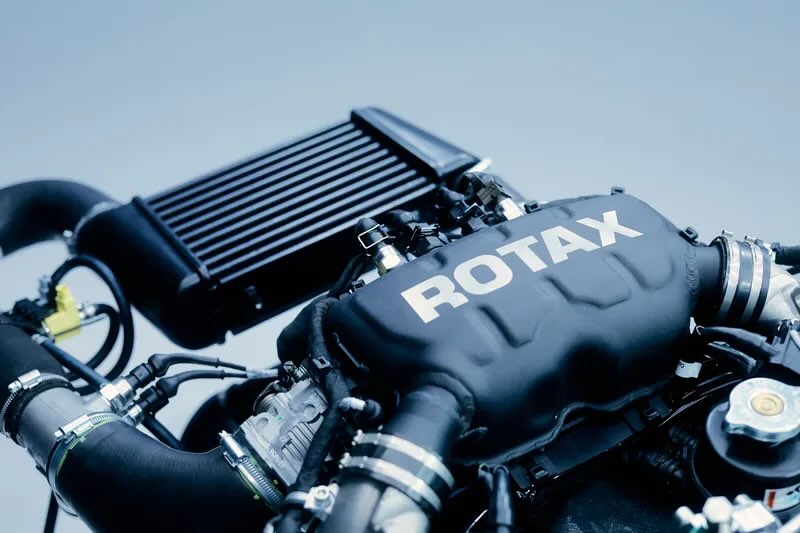
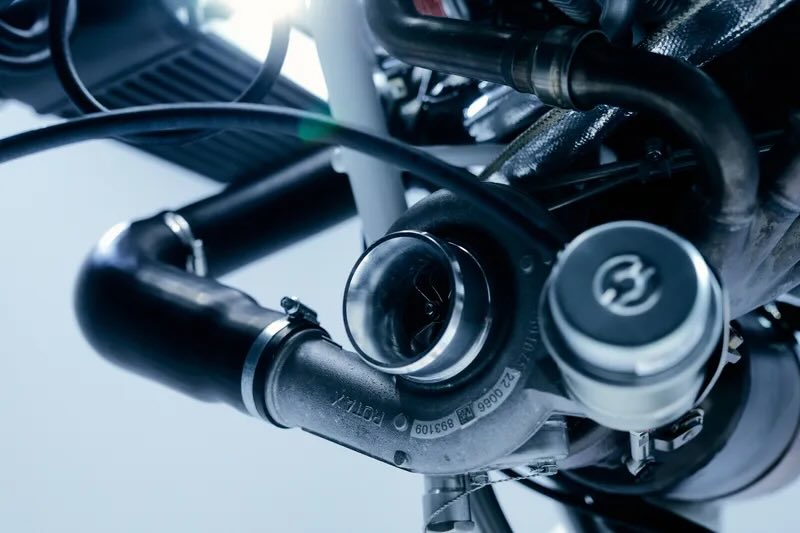
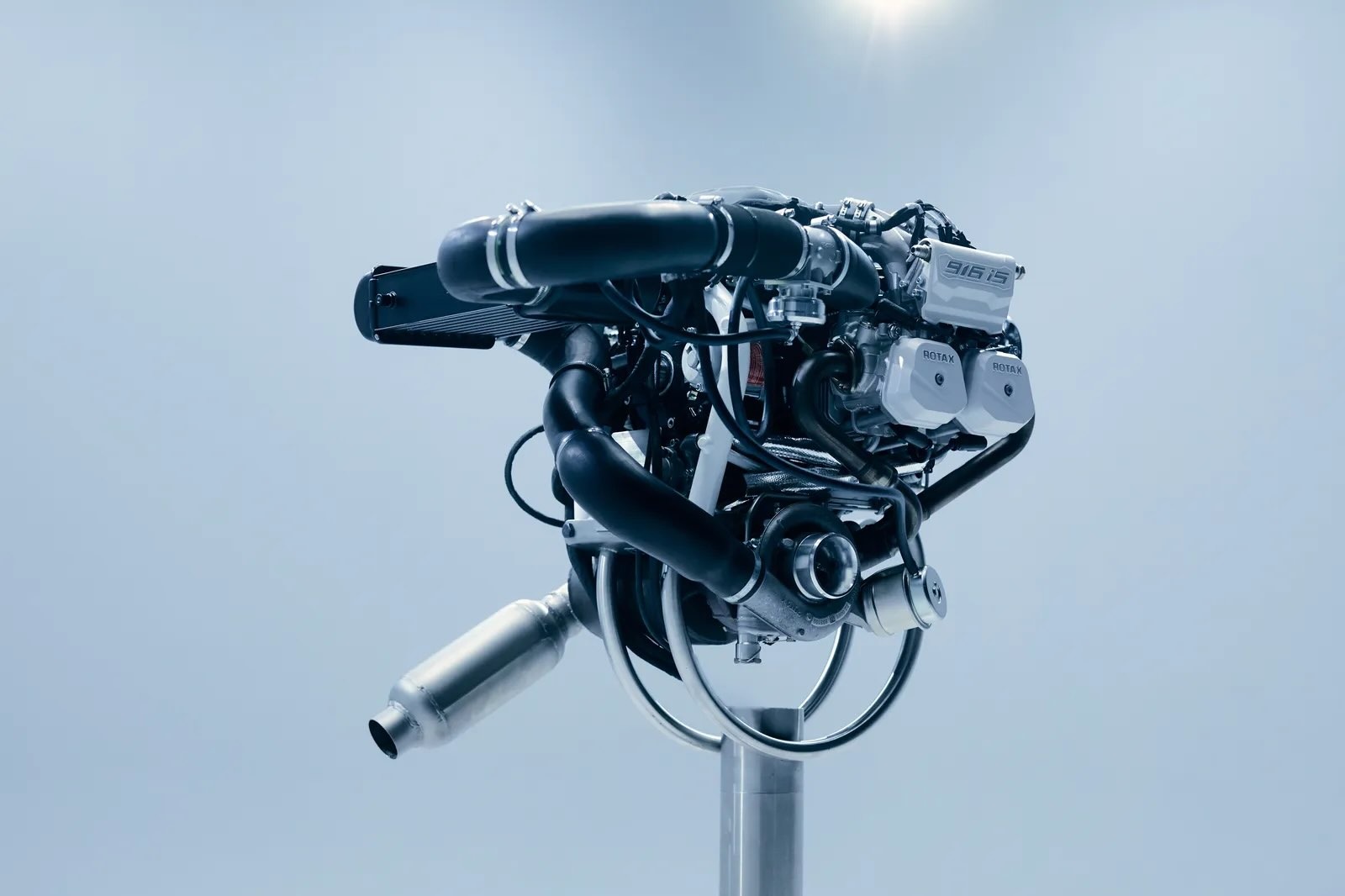
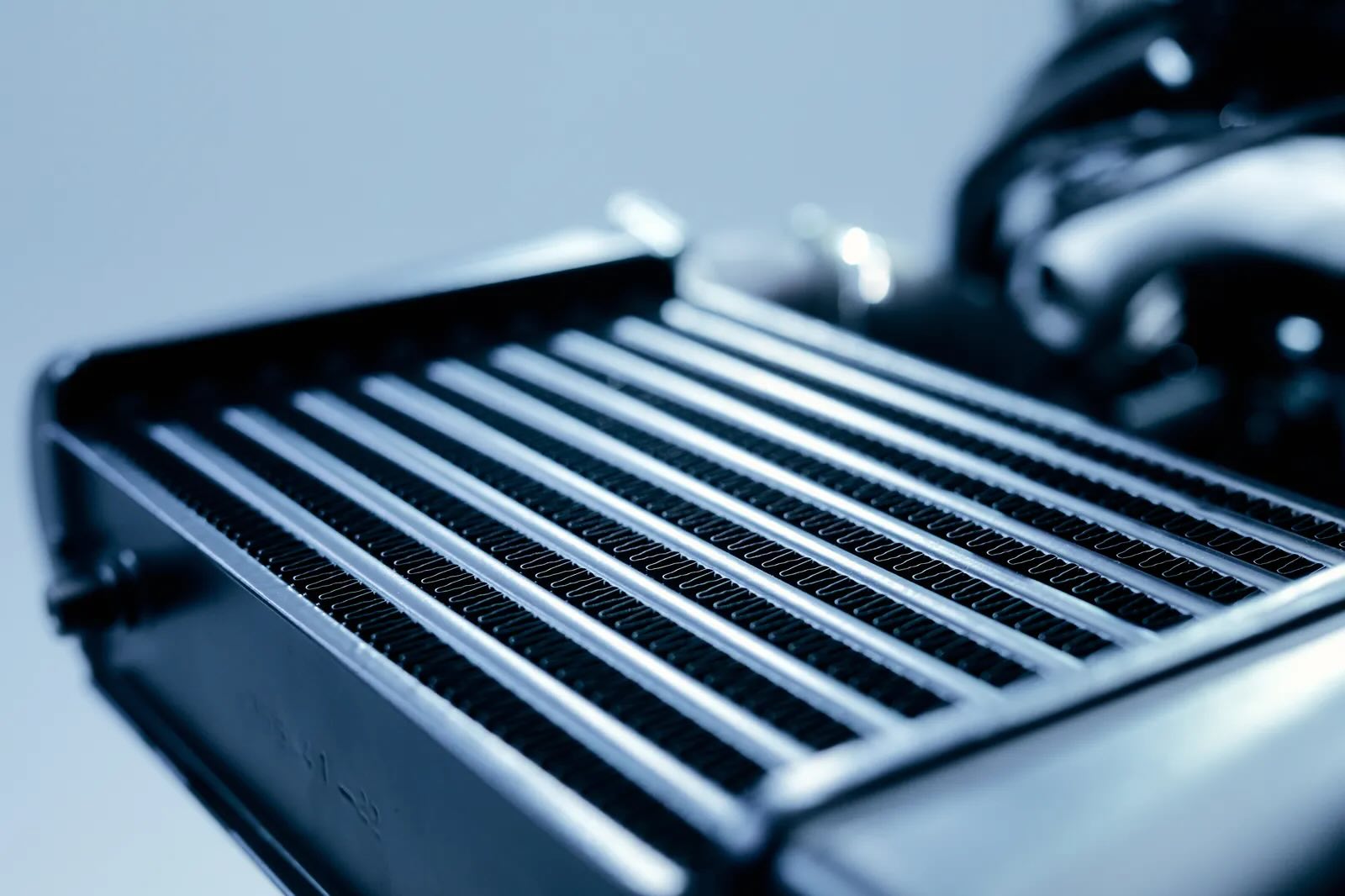
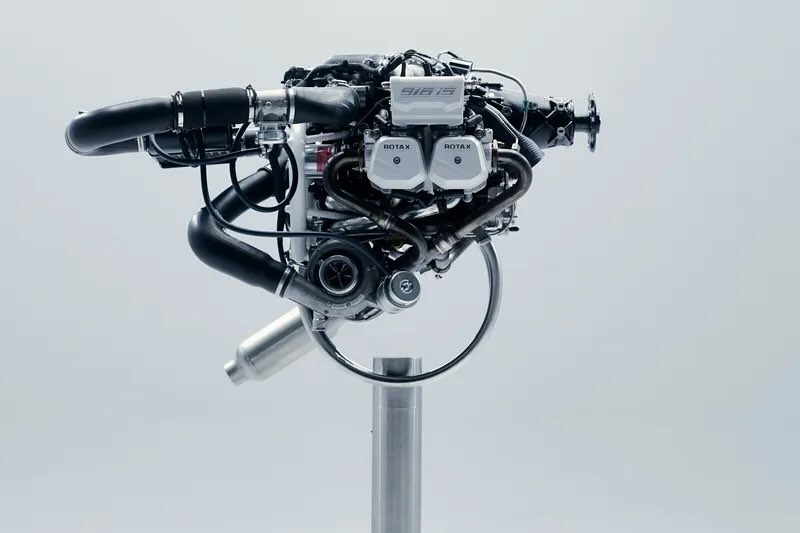
The Rotax 916 iS is the newest and most advanced aircraft engine in the Rotax family. It represents a major technological leap from its predecessors in the 912 and 915 series, offering improved performance, electronic control, and low weight. Designed for light sport aircraft, experimental planes, gyroplanes, and ultralights, the engine is also attracting interest from manufacturers of VTOL and UAV systems requiring high power and reliability.
Maximum efficiency and performance under all conditions
The 916 iS is a four-stroke, four-cylinder, liquid- and air-cooled turbocharged engine with a displacement of 1352 cm³, delivering 160 horsepower (118 kW) at 5800 RPM — a significant increase over the 915 iS (141 hp). It features electronic fuel injection and dual electronic ignition, managed by an advanced ECU (Engine Control Unit) that continuously optimizes the air-fuel mixture for maximum efficiency and performance under all conditions.
High power-to-weight ratio
One of its most notable features is the power-to-weight ratio. With a dry weight of only about 85 kg, the engine provides short takeoff distances, strong climb performance, and higher cruise speeds without compromising fuel efficiency or longevity. It can operate on both AVGAS 100LL and unleaded automotive fuel (MOGAS), typically consuming 20–25 liters per hour in cruise.
The Rotax 916 iS is built for modern digital cockpits, offering integration with FADEC (Full Authority Digital Engine Control), which reduces pilot workload and prevents engine misuse. Maintenance is straightforward, and the TBO (Time Between Overhaul) is 2000 hours, with potential for increase as service experience grows.
Perfect balance between power, efficiency and technology
Overall, the Rotax 916 iS combines power, efficiency, and technology in a compact package. It delivers performance levels once reserved for larger engines, reinforcing Rotax’s reputation as a global leader in light aircraft propulsion. The Rotax 916 iS is a perfect match for the ICP Ventura 4.
The 916 iS stands as a milestone in aviation engineering — uniting high performance, low weight, and digital precision for the next generation of light aviation.


